
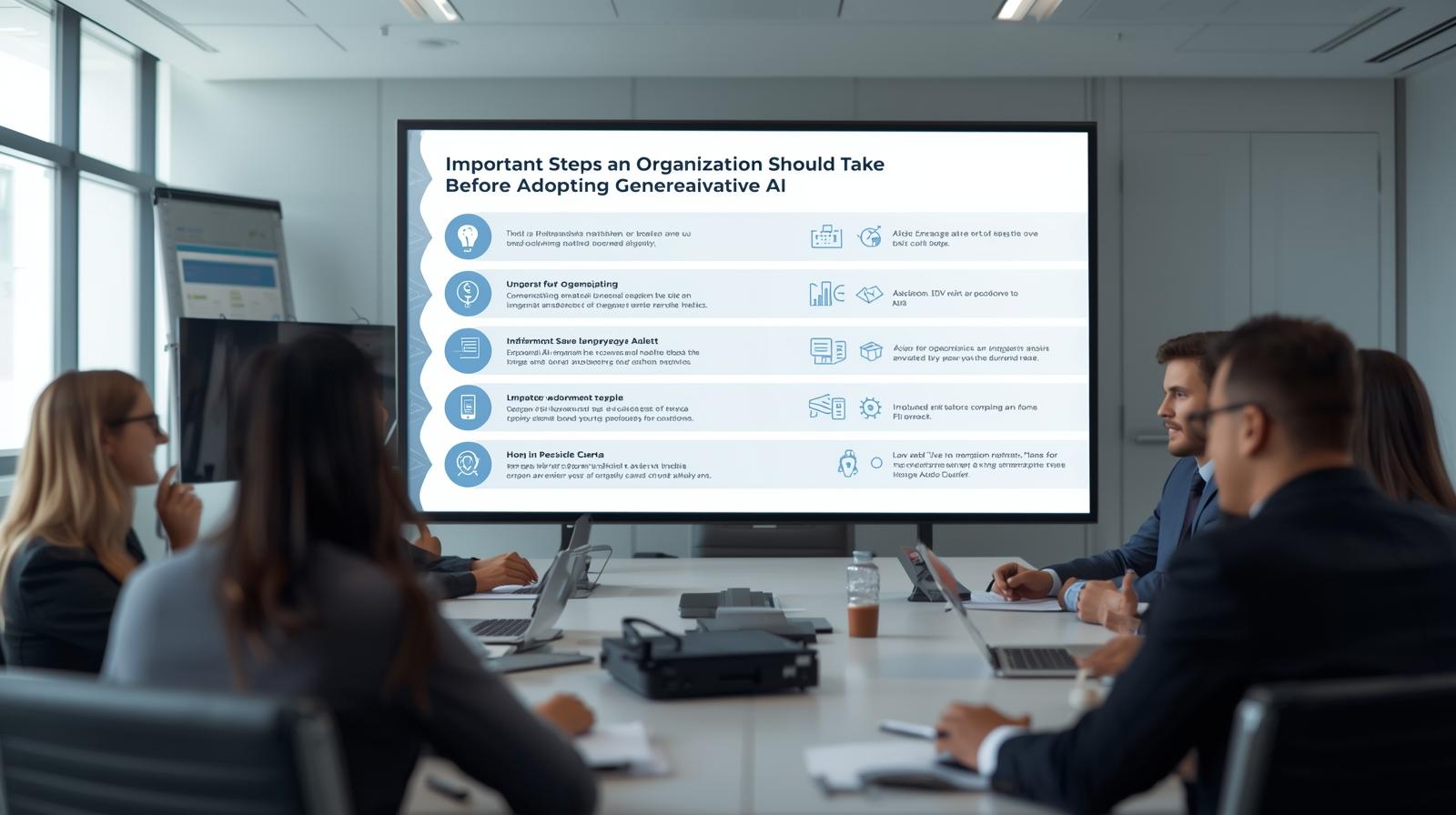
Generative AI (GenAI) has revolutionized how businesses operate, from automating content creation to enhancing decision-making and boosting productivity. Tools like large language models can generate text, images, code, and more, offering immense potential for innovation. However, rushing into adoption without proper preparation can lead to risks such as data breaches, ethical dilemmas, biased outcomes, and wasted resources. To harness GenAI effectively, organizations must lay a strong foundation. This blog outlines key steps to take before diving in, drawing from expert insights and best practices.
Assess Organizational Readiness and Maturity
Before implementing GenAI, evaluate your organization’s current state to identify gaps and strengths. Conduct a comprehensive assessment covering workforce skills, existing infrastructure, data quality, and cultural readiness for change. For instance, determine your AI maturity level—whether you’re at the proof-of-concept stage, production, or ready for scaling. This involves analyzing resource availability, technical capabilities, and potential bottlenecks in people, processes, and technology. Tools like readiness assessments or surveys can measure aspects such as AI tool usage, quality perceptions, and employee concerns about job impacts. Addressing these early ensures a smoother transition and helps prioritize investments.
Establish a Strong Governance Framework
Governance is crucial to mitigate risks and ensure responsible use. Develop an internal framework that includes policies on ethical AI deployment, bias detection, data privacy, and intellectual property considerations. Appoint a Chief AI Officer or form a cross-functional AI working group involving legal, HR, IT, and compliance teams to oversee decisions. Create clear guidelines for acceptable use, such as handling sensitive data and complying with regulations like GDPR. This step also involves setting up processes for ongoing monitoring, auditing, and human oversight to catch issues like hallucinations or discriminatory outputs. Without solid governance, organizations risk legal liabilities and reputational damage.
Build AI Literacy and Skills Across the Workforce
GenAI adoption succeeds when employees are equipped to use it effectively. Invest in training programs to enhance AI literacy, focusing on skills like prompt engineering, critical thinking, and understanding AI limitations. Address fears about job displacement by fostering a learning culture where mistakes are seen as growth opportunities and employees feel supported. Encourage experimentation through low-risk activities, such as using AI for drafting emails or brainstorming, to build confidence. Tailor upskilling to roles—developers might need coding assistance training, while managers focus on strategic applications. Research shows that providing dedicated time for learning can significantly boost adoption rates.
Secure Data and Address Ethical Risks
Data is the fuel for GenAI, so prioritize security and ethics from the start. Implement robust data management strategies to ensure information is high-quality, accessible, and protected against breaches. Conduct vulnerability scans, enforce access controls, and use frameworks like OWASP Top 10 for LLMs to identify risks such as data poisoning or prompt injection attacks. Ethically, test for biases in datasets and outputs, and establish content moderation policies, especially in sensitive areas. Remember, inputs to third-party AI tools might not stay private, so anonymize data and avoid sharing trade secrets. Building trust through transparency about data usage is key to employee buy-in.
Identify High-Value Use Cases and Pilot Projects
Don’t adopt GenAI broadly at first; start small to demonstrate value. Brainstorm use cases aligned with business goals, such as automating routine tasks in marketing, customer service, or software development. Prioritize simple, high-impact applications that deliver quick wins, like code generation or content summarization. Launch pilot projects to test feasibility, measure outcomes, and gather feedback. This prototyping phase helps refine approaches and builds momentum. Use metrics like productivity gains or error reductions to evaluate success before scaling.
Prepare Infrastructure and Technical Foundations
GenAI demands significant computational power, so upgrade your infrastructure accordingly. Leverage cloud platforms for scalability and implement MLOps for model management, including continuous integration and monitoring. Ensure compatibility with existing systems and plan for integration into workflows without disruption. If using external tools, evaluate costs versus benefits and consider hybrid setups for sensitive operations. A solid technical base prevents performance issues and supports long-term growth.
Foster Transparency, Culture, and Change Management
Create a supportive environment by communicating openly about AI plans, goals, and impacts. Share how GenAI enhances human roles rather than replacing them, and address resistance as valuable feedback for improvement. Appoint “AI champions” or a Center of Excellence to guide adoption and share best practices. Promote a culture of humility and collaboration, perhaps through hackathons or communities of practice. Effective change management, including reducing productivity expectations during learning phases, helps minimize burnout and maximizes enthusiasm.